What actually drives the cost of landscape lighting
There is no flat price for lighting a home, and understanding why makes the quote make sense.
The most common question a lighting company gets is what it costs, and the most honest answer is that it depends on the house. That sounds like a dodge.
It is not. A menu price would mean charging the same for a small townhouse and a wooded acre, and neither owner would be well served by that.
Here is what actually moves the number, so you can walk into a quote knowing what you are looking at.
The size and shape of the property
More house and more land means more to light and more distance to cover. A facade, a run of trees and a back patio each add fixtures and cable, and a larger lot needs the transformers and wiring planned to carry power that far. This is usually the single biggest factor.
How many fixtures the design calls for
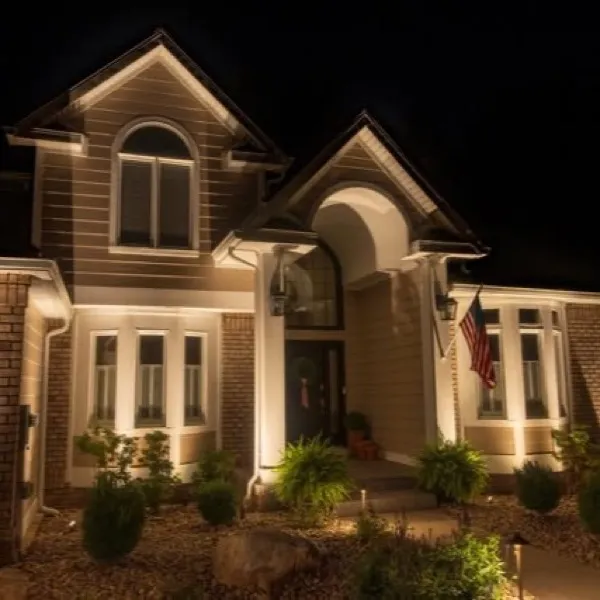
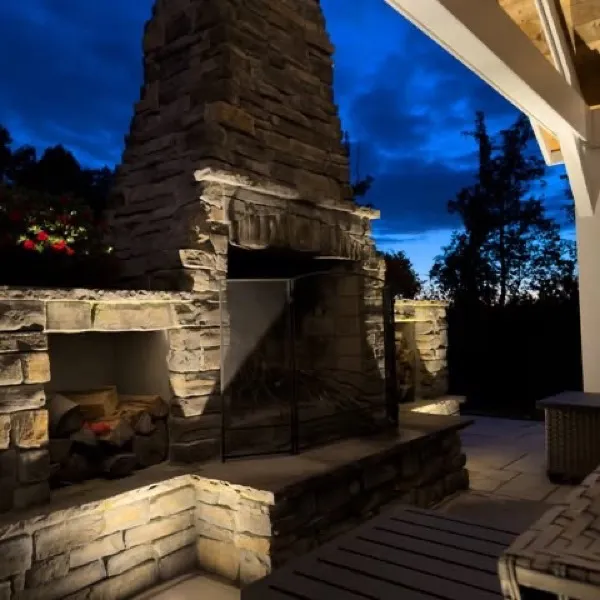
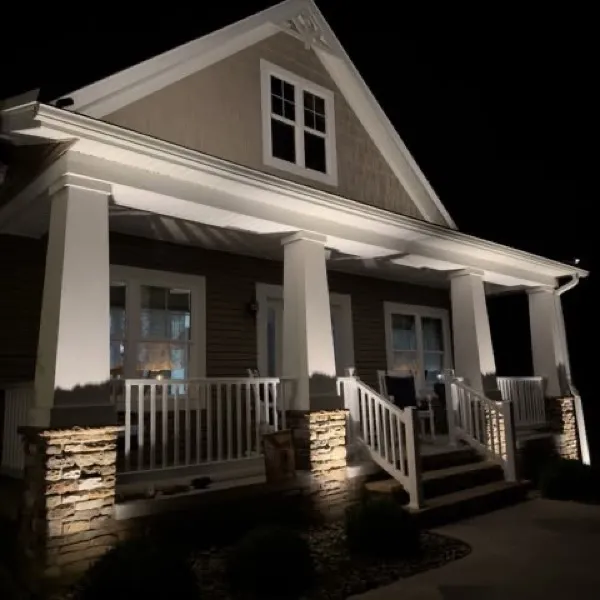
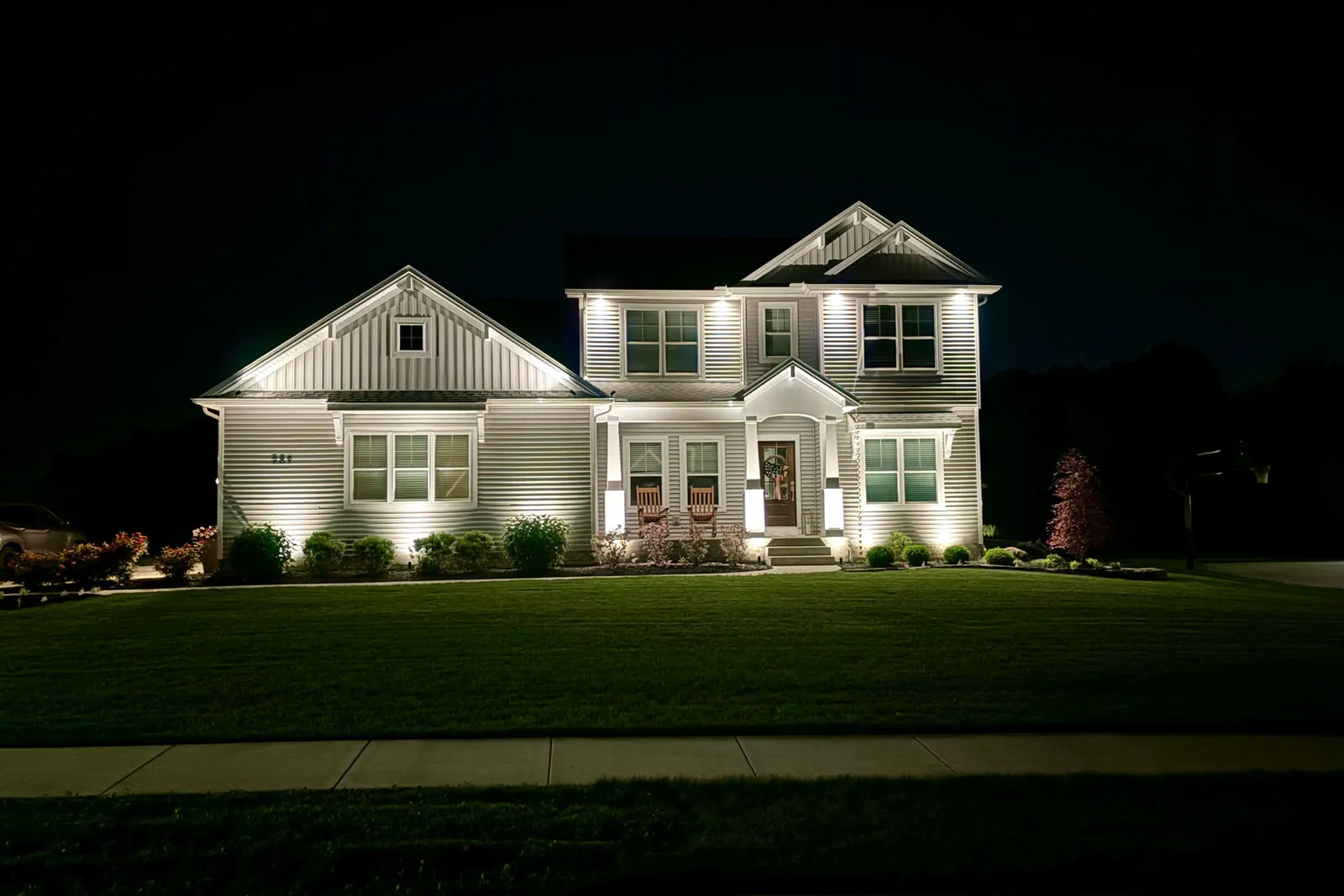
Lighting is done in layers. Uplighting the architecture, picking out specimen trees, path and step lighting for footing, a wash across the hardscape.
Each layer is fixtures, and the design decides how many. A dramatic, fully layered result costs more than lighting a single feature, because it is more equipment doing more work.
The fixtures themselves
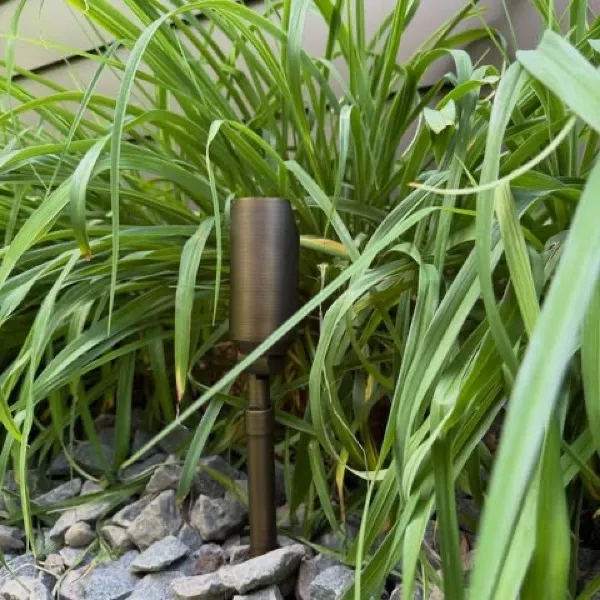
Nikola uses solid brass and copper for most work. Both resist corrosion and weather in gracefully rather than degrading, which is why they cost more than the plastic fixtures sold at a big-box store and why they are still working years later.
The LED bulbs are rated up to 50,000 hours and are replaceable. You are paying for hardware that lives outdoors permanently.
A cheap fixture is only cheap until the first winter. Brass and copper are priced for the decade they are meant to last.
The terrain
Flat ground is straightforward. Slopes, retaining walls, terraces and mature root systems are not.
On a contoured lot the fixtures have to be placed and aimed to work with the grade, and the cable runs planned around it. Difficult ground takes more time and more care, and that shows up in the quote.
Whether it is new work or a repair
Fixing, re-lamping and re-aiming an existing system is a different job from designing and installing one from scratch, including systems another company put in. If you already have lighting that has stopped performing, the conversation starts in a different place.
What a layered lighting design includes
Landscape lighting is priced by the design, and the design is built in layers, so it helps to know what those layers are. Uplighting sits low at the base of a tree or against the facade and throws light upward to model the bark, the branch structure or the texture of the stone. Path and step lighting works quieter and closer to the ground, marking the edge of a walk and the lip of a stair so the footing is clear without anyone staring into a bulb.
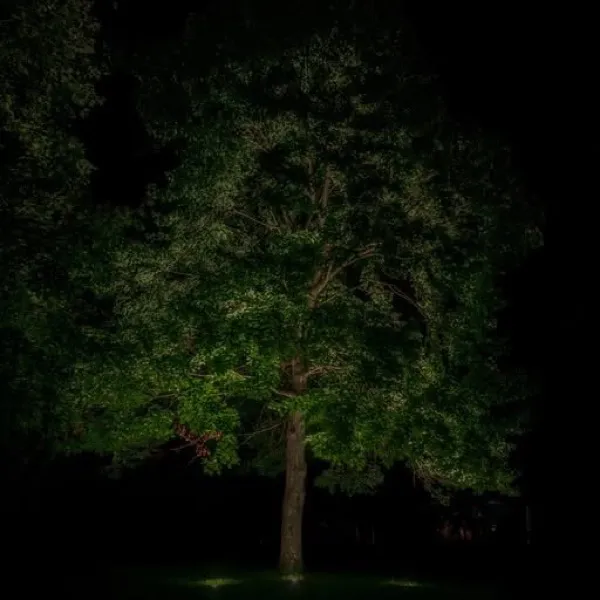
A wash spreads soft, even light across a wall or a hedge to give a scene its background. Downlighting, sometimes called moonlighting, hides a fixture high in a mature tree and lets the light fall through the branches to dapple the ground the way a full moon does. Most homes use two or three of these together, and how many layers a design calls for, and how far each one has to reach, is the clearest thing a walk of the property settles.
The parts of the system you never see
A good share of what a lighting system costs is buried or tucked out of sight, and it is the part that decides whether the system still works in five years. A transformer steps the household current down to the low voltage the fixtures run on, and it is sized with headroom so it is not driven at its limit every night. The cable is direct-burial rated and chosen at a gauge that carries power to the far fixtures without the light fading down the run.
The connections are the weak point in any outdoor wiring, so they are made with sealed, corrosion-resistant connectors rather than the twist caps that fail the first wet winter. None of this shows in the finished look, and all of it is why two quotes that promise the same number of fixtures are not always the same job.
A cheap fixture is only cheap until the first winter. Brass and copper are priced for the decade they are meant to last.
Control, timing and how you run it
How a system is switched matters more than it sounds. A basic install can run on a photocell and a timer, so the lights come on at dusk and off at a set hour on their own. Add a smart controller and the schedule, the brightness and the zones move to an app, so the front can run later than the back, or a single area can be lifted for an evening outside.
On a permanent roofline system every bulb is individually addressable, which is what lets the same track read as warm architectural light through the year and switch to colour for a holiday. The level of control you want is a real line in the design, since it changes the controller and sometimes the wiring behind it.
What lighting is worth beyond the look
The reason to light a home is usually how it looks after dark, but a well-planned system earns its keep in quieter ways too. Lit steps, walks and grade changes are simply safer to cross, which matters most in the months when people arrive home after sunset. A house that is lit is a less inviting target than one that sits dark, and light placed with intent does that job without floodlighting the yard.
A lit garden is also a garden people actually use later into the evening and later into the year, which is the part owners tend to mention first once it is in. None of that shows on a quote, but it is a large part of what the quote buys.
Repairs, rescues and taking over another system
Not every job starts from scratch. A common call is a system installed years ago that has slowly gone dark, with fixtures full of water, connections corroded, or a transformer that has given up.
Some of it can be rescued, since brass and copper fixtures often clean up and take a new bulb, and the layout may only need re-aiming and fresh connections. Some of it is past saving, usually the cheap fixtures and the buried splices.
Taking over a system another company installed is its own kind of job, and the quote reflects what is worth keeping and what has to be replaced. If your lighting has stopped doing what it used to, that assessment is part of the free consultation as well.
What we will not cut to lower a number
There are ways to make a lighting quote smaller that cost the homeowner more later, and Nikola does not use them. The plastic fixtures sold for a fraction of the price of brass do not last a Great Lakes winter, and replacing a failed system is dearer than building one properly the first time. An undersized transformer or thin cable saves a little on the day and shows up as dim, uneven light down the run, and skipping the sealed connectors invites the corrosion that kills outdoor wiring.
So when a Nikola quote lands higher or lower than another, the honest way to compare them is line by line on the hardware and the design, not on the total alone.
Why the on-site demo exists
This is the reason Nikola lights the property in person before quoting. Luke brings fixtures to the house in the evening and lights it while you watch, moving the beam until it does what you want. The number that follows is built from what you actually saw, not from a guess made in an office.
Book a free consultation and you will get a real quote for a real design. You can read more about the landscape lighting itself first.