
How to plan a front yard lighting layout
A simple way to think about what to light first, before anyone walks the property with fixtures.
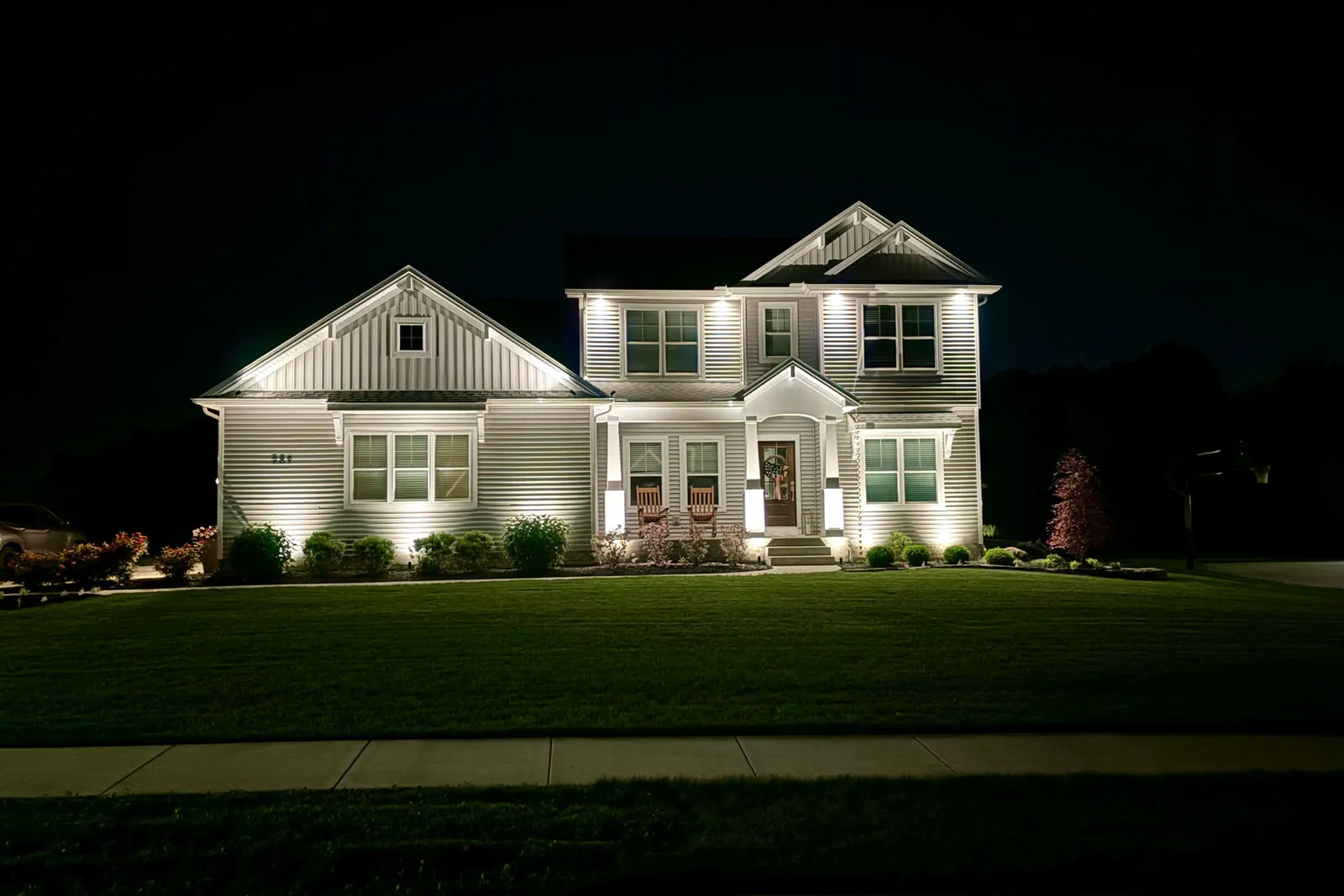
Most front yards get lit backwards. People start with the path because it is obvious, add a few spotlights at the corners, and end up with a yard that looks busy without looking designed. A better plan starts with the house and works outward.
Start with the one thing that matters most
Stand across the street after dark and ask what you want a passerby to see first. For most homes it is the front of the house itself, the stone or brick, the entry, the strong architectural lines. That becomes the anchor. Everything else supports it or gets left dark on purpose.
Light in layers, not all at once
A good layout has three or four layers and stops there. The facade is one. A specimen tree or two is another. The path and steps are a third, lit for footing. Beds and hardscape are a quiet fourth, washed rather than spotted. Add every possible layer and the yard flattens out, because when everything is lit, nothing stands out.
The hardest part of lighting design is deciding what to leave dark.
Respect the trees you already have
A mature tree is usually the best thing in a front yard to light, and it is also the trickiest, because the canopy moves and the leaves come and go. This is why aiming happens on site, at night, with the fixture in hand, rather than from a plan drawn at a desk.
Start from the street
The best place to plan a front-yard layout is standing at the curb after dark, because that is where the house is seen from. Look at what you want the eye to land on first, and what can stay quiet. A good scheme has a clear focal point and a supporting cast, not an even wash of light across everything, which flattens a house rather than shaping it.
Choose your focal points
Most front yards have two or three features worth lighting: the facade itself, one or two specimen trees, and the entry. Pick those first and build around them. A single mature tree uplit well does more for a home at night than a dozen small fixtures spread thin, and a lit entry both looks welcoming and makes the door easy to find.
Layer the light
Once the focal points are set, think in layers. Uplighting models the facade and the trees. Path and step lighting handles the routes and the footing lower down. A soft wash can fill a wall or a hedge behind the rest. Downlighting from within a tree drops a dappled light onto the lawn. Two or three layers working together give depth, which is the thing a flat, single-layer scheme never manages.
Mind the glare
The most common mistake in a home layout is glare: fixtures aimed so you see the bulb instead of what it lights. Keep sources shielded and out of sight lines, aim across a feature rather than straight into a window or the street, and let the effect show rather than the source. The goal is to notice the lit house, not the lights.
Plan for the seasons and the years
A front yard changes. Beds fill in, trees grow, and a fixture perfect this spring can be buried in foliage by August or lost behind snow by January. A layout worth having accounts for that, leaving room to re-aim as things grow and keeping fixtures where winter will not swallow them. Brass and copper fixtures and long-life LED bulbs are chosen because the layout is meant to last years, not a season.
When to bring in a demo
You can sketch a layout on paper, but light behaves in ways a sketch cannot show. The reason Nikola lights the property in person before quoting is that the beam has to be seen on the real facade and the real trees to be judged. If you have a layout in mind, an evening demo is the fastest way to see whether it does what you pictured.
Watch the two common mistakes
- Over-lighting: too many fixtures at full brightness turns a subtle effect into a parking lot.
- Glare: a fixture aimed so you see the bulb instead of what it lights ruins the whole scene from the street.
You can sketch all of this on paper, but the honest truth is that a front yard looks different lit than it does imagined. That is the whole reason Nikola brings fixtures to the property and lights it while you watch. Book a free consultation and you will see your own layout before you commit to it. There is more on the landscape lighting service itself if you want the background first.